
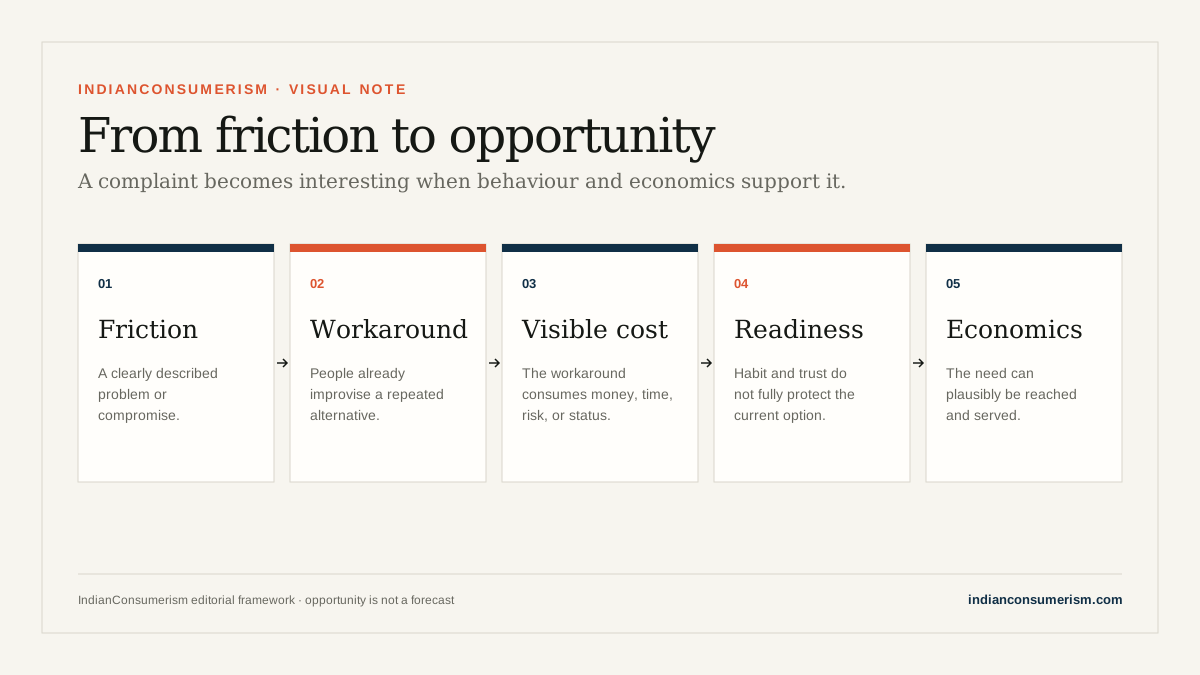
Sample opportunity framework. The examples below are generic and illustrative. They are not claims about a specific market or company.
Friction is the beginning of the investigation
A complaint can be memorable without being commercially meaningful. The useful question is whether the problem causes enough people to change their behaviour or incur a real cost.
The evidence ladder
- Stated frustration: people can describe the problem clearly.
- Repeated workaround: they already improvise an alternative.
- Visible cost: the workaround consumes money, time, risk, or status.
- Switching readiness: the current solution is not protected by strong habit or trust.
- Reachable economics: the need can be served at a viable acquisition and delivery cost.
| Evidence level | What it supports | What it does not prove |
|---|---|---|
| Interviews | Language, motivations, and hypotheses | Market prevalence |
| Behavioural observation | Actual journeys and workarounds | Willingness to pay at scale |
| Survey | Distribution of reported attitudes or behaviours | Causality on its own |
| Transactions or filings | Revealed demand and business economics | The reason behind every pattern |
Write opportunity statements that can be disproved
An actionable opportunity statement names the user, decision, friction, current workaround, and conditions under which a better offer may win. It should also name the evidence that would weaken the thesis.
Good research keeps the exit door visible. A market-gap thesis is stronger when the team knows what evidence would make it abandon the idea.
Publishing the confidence level
IndianConsumerism will label exploratory notes, evidence-backed analyses, and primary research differently. That distinction helps readers use each piece for the right kind of decision.